Learning Outcomes
After completing this lesson, students will be able to:
i. Identify the basic components of viral structure, including the capsid, envelope, and genetic material.
ii. Describe the structural differences between bacteriophages, influenza viruses, and human immunodeficiency viruses (HIV).
iii. Explain how viral structure relates to their function and mode of infection.
i. Introduction to Viral Architecture: Building Blocks of Microscopic Invaders
Viruses, the tiniest of infectious agents, exhibit a remarkable diversity in their structure, often reflecting their mode of infection and the host cells they target. Understanding the intricate architecture of viruses provides valuable insights into their biology and their interactions with host cells.
ii. The Capsid: A Protective Shell for Viral Genetic Material
At the core of a virus lies the capsid, a protein coat that encloses the viral genetic material, either DNA or RNA. The capsid is composed of repeating protein subunits called capsomers, which assemble in a symmetrical fashion. The shape of the capsid is a defining feature of virus classification, with common shapes including icosahedral (20 triangular faces), helical (a spiral), and complex structures.
iii. The Envelope: A Lipid-Based Cloak for Host Cell Entry
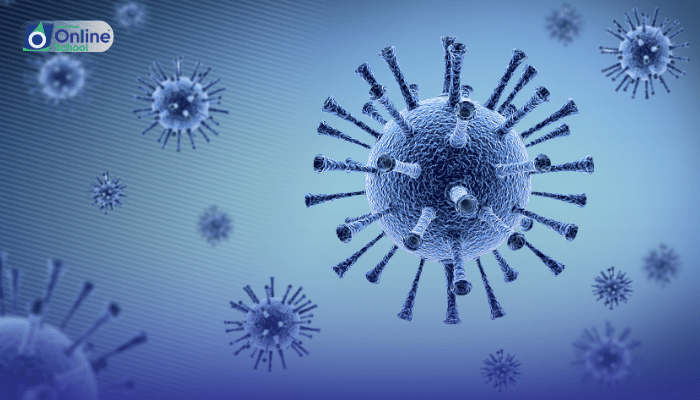
Some viruses, such as influenza viruses and HIV, are surrounded by an envelope, a lipid bilayer membrane derived from the host cell membrane during the process of viral assembly. The envelope is embedded with proteins that play crucial roles in virus entry, fusion with the host cell membrane, and immune evasion.
iv. Genetic Material: The Blueprint for Viral Replication
Within the confines of the capsid lies the viral genetic material, either DNA or RNA. The genetic material carries the instructions for viral replication and protein synthesis, enabling the virus to hijack the host cell's machinery to produce new viral particles.
v. Bacteriophages: Viruses That Infect Bacteria
Bacteriophages, or phages, are viruses that infect bacteria. They exhibit a diverse range of structures, but many phages share a common architecture. The T4 phage, a well-studied example, has a complex capsid with a head, a tail, and tail fibers. The head contains the viral DNA, while the tail fibers attach to the bacterial cell surface, facilitating the injection of viral genetic material into the host cell.
vi. Influenza Viruses: Masters of Respiratory Infections
Influenza viruses, the causative agents of influenza (flu), are enveloped viruses with a spherical capsid. The envelope is studded with two key glycoproteins, hemagglutinin (HA) and neuraminidase (NA). HA binds to sialic acid receptors on the surface of host cells, initiating the entry process, while NA cleaves sialic acid, facilitating the release of newly formed virions from infected cells.
vii. Human Immunodeficiency Virus (HIV): The Cause of AIDS
HIV, the virus responsible for acquired immunodeficiency syndrome (AIDS), is an enveloped virus with a complex, conical capsid. The envelope is embedded with two major glycoproteins, gp120 and gp41, which interact with specific receptors on the surface of immune cells, such as CD4 and CCR5, enabling the virus to enter and infect these cells.
A Tale of Structural Diversity
The vast array of viral structures reflects the remarkable adaptability and diversity of these microscopic agents. Each virus has evolved a unique architecture that is tailored to its specific mode of infection and the host cells it targets. Understanding viral structure is essential for developing effective antiviral therapies and combating the wide range of diseases caused by viruses.
